Chapter 1 Annotation
1.1 Brief overview
The Pipeline Digital Twin (PDT) is a unique, comprehensive, high-tech, and reliable solution for assessing, monitoring, and optimizing the condition of pipeline systems across every stage of their life cycle.
The platform lets you build a detailed three-dimensional digital model of the network, integrate diverse diagnostic data, calculate load characteristics, determine residual life and safe operating windows, and develop an optimal program for repairs and preventive maintenance.
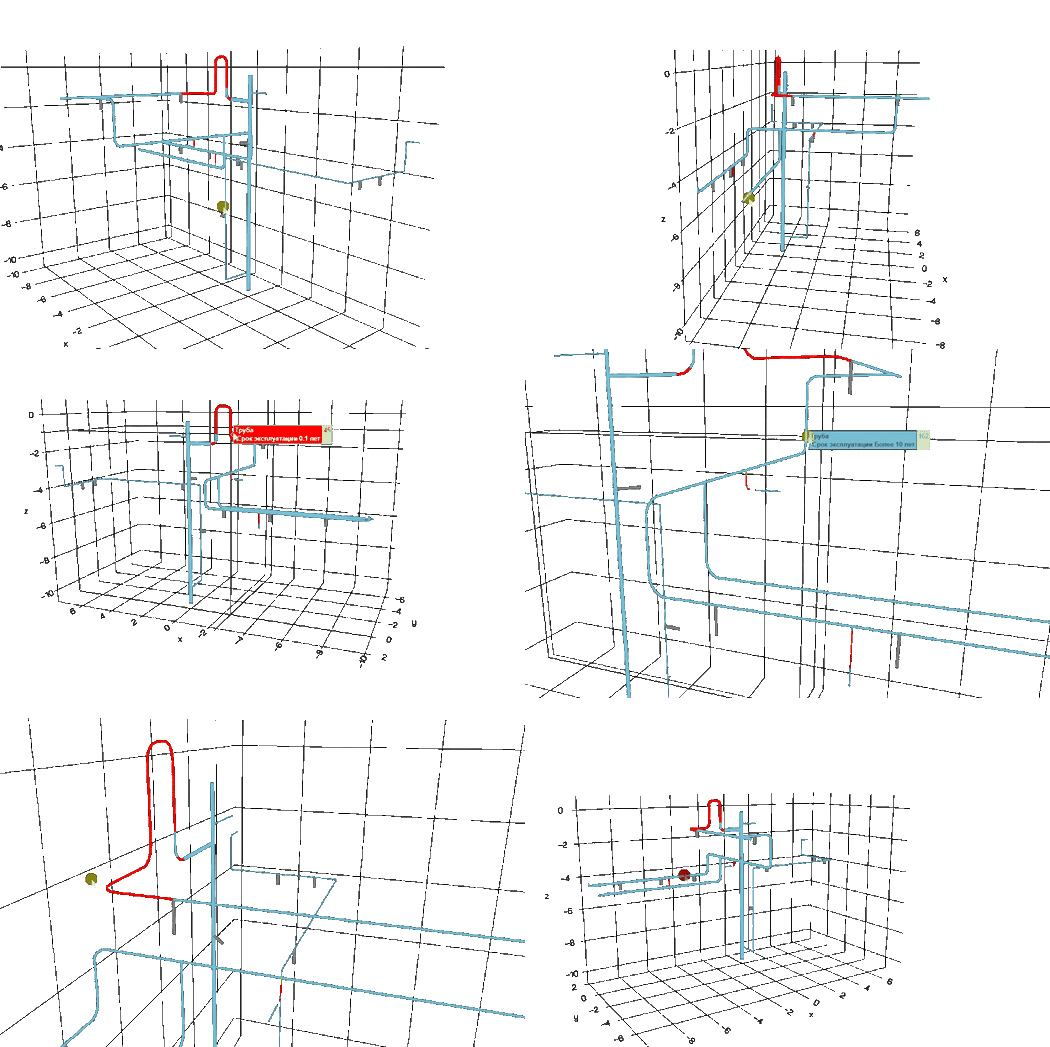
Figure 1 — Three-dimensional digital model of a pipeline system
1.2 Purpose and scope
The PDT platform manages infrastructure risk for pipeline systems proactively. Its guiding principle: “Manage risks, not consequences.”
The platform focuses on these areas:
- Infrastructure digitization — building 3D models of pipelines that account for complex topology, materials, and structural features;
- Load calculation — physically modeling strains, stresses, and bending moments;
- Failure prediction — pinpointing potentially hazardous zones and forecasting failures;
- Repair planning — building well-grounded programs for capital and routine repairs;
- Strength analysis — determining residual life and safe operating windows.
1.3 Target industries
The PDT works for organizations across a range of industries that operate pipeline infrastructure:
| Industry | Application |
|---|---|
| Oil and gas | Monitoring trunk and field pipelines, forecasting failures |
| Water utilities and heating networks | 3D modeling, diagnostics, and repair planning for water supply networks |
| Gas services | Assessing gas pipeline wear, building repair work plans |
| Industrial enterprises | Inspecting continuous-cycle process pipelines |
| Utility companies | Managing the service life of engineering networks, shifting from emergency to scheduled repairs |
| Designers and builders | Spatial models, load calculations for new facilities |
1.4 Key performance indicators
What partners gain from the PDT platform:
- 6 billion rubles a year — partner savings;
- 67 % — drop in maintenance costs;
- 72 % — lower probability of failures.
1.5 Registration and legal status
- Certificate of state registration of a computer program RU2021663305, dated 08/16/2021.
- Entry in the Russian Software Registry No. 26107, dated 01/27/2025.
- Trademark certificate No. 858012 — the “Digital Twin” logo.